BV
BGE v3
🔥 Hotby Beijing Academy of AI (BAAI) · 8K ctx
MIT~568M (M3)
View model More to explore
About this category
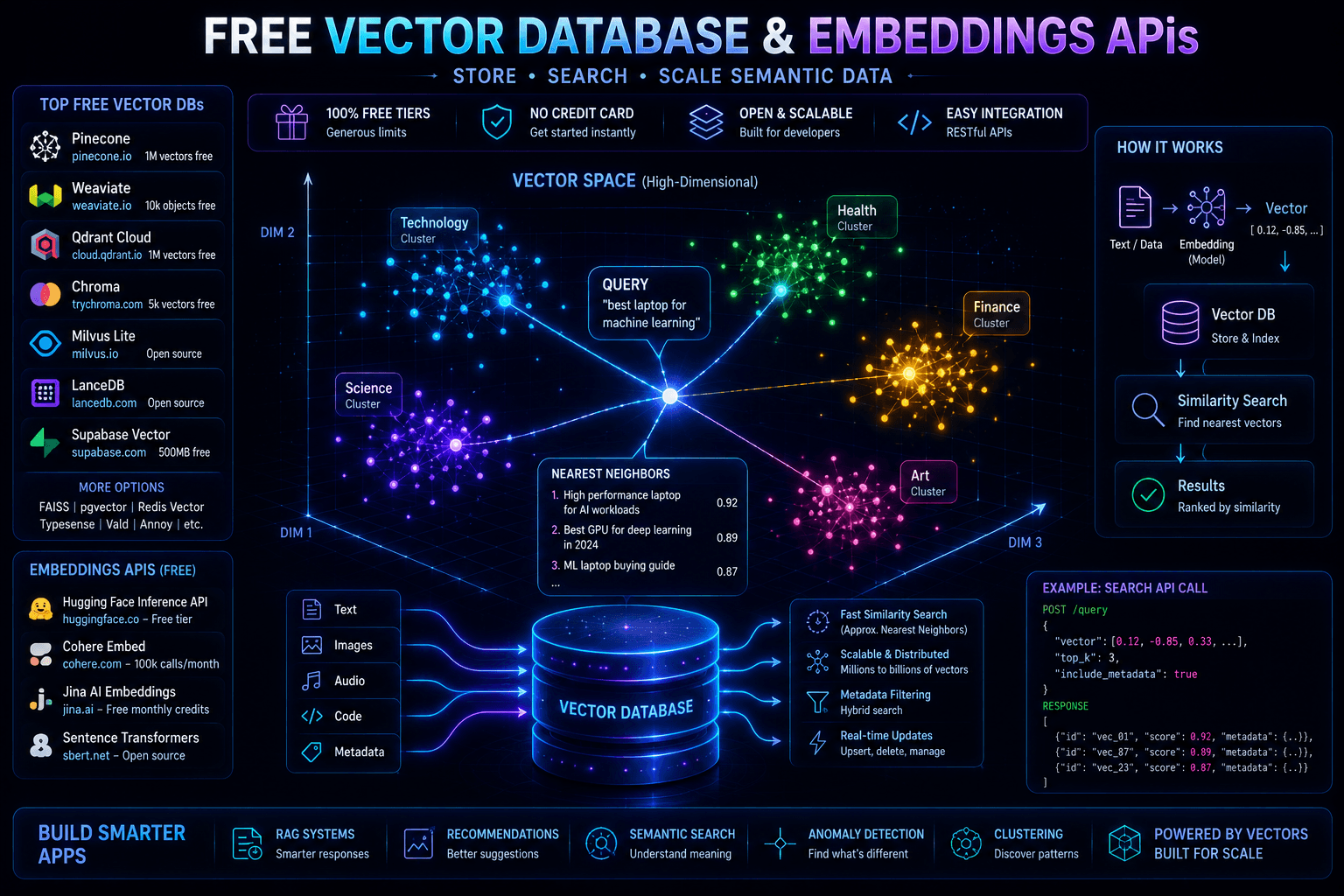
Embedding models convert text, images, audio, and documents into dense numerical vectors — lists of floating-point numbers that encode semantic meaning. Two pieces of content about the same topic will have similar vectors even if they share no words in common. This property powers semantic search (find documents by meaning, not keyword), RAG systems (retrieve relevant context before generating an LLM response), duplicate detection, clustering, and recommendation engines. Embedding models are the invisible foundation of most production AI features in 2025–2026.
On the MTEB benchmark, NVIDIA NV-Embed-v2 leads English retrieval at 72.31 average score. Qwen3-Embedding-8B (70.58 MTEB) is the best multilingual choice — it supports flexible output dimensions from 32 to 4,096, reducing storage costs for large indexes. BGE-en-ICL (BAAI) achieves 71.24 MTEB with in-context learning for domain adaptation. For managed APIs, OpenAI text-embedding-3-large (64.6 MTEB) and Cohere embed-v4 (65.2 MTEB, multimodal) are the most widely integrated. For self-hosted use, Nomic Embed Text offers an excellent quality-to-size ratio and is Apache-2.0 licensed.